Attimis Hiking Trails for Beginners: Where to Start and What to Bring
Attimis is easy to underestimate. From the piazza the hills look like scenery, something to admire from a bench with a coffee. Then you notice the lanes heading out of town, the stone tracks climbing between vineyards and chestnut woods, and the hamlets sitting up there as if they had always been a short stroll away. They are not always a short stroll away. That is exactly what makes them worth walking.
Beginners here tend to make the same mistake, and it has nothing to do with fitness or equipment. They pick the walk with the best view, the one somebody posted a photo of, and treat it as a first outing. The result is a hard day that ends in the dark with sore knees and a vague dislike of hiking. A better approach is duller and far more rewarding: start with the paths you can reach on foot, add height slowly, and learn what your own pace actually feels like before you commit to a summit.
Start With the Walks You Can Do From the Door
Your first three or four outings should not require a car at all. Walk out of the village on the lanes heading toward Forame or Subit, follow the farm tracks between fields, and let the loop close back on itself in forty-five minutes to an hour and a half. There is no navigation to speak of, no packing list to agonise over, and if something goes wrong you are never far from a road.
These walks are not a formality. They teach you things a guidebook cannot. You find out how your shoes behave on wet stone. You notice that the afternoon sun on a south-facing slope is genuinely hot in June, and that a light layer you were glad of at nine in the morning becomes a nuisance by eleven. You learn that your comfortable walking pace is slower than you assumed, which is useful information before you plan anything ambitious.
Walk the same loop twice in different conditions. The second time is when it stops being exercise and becomes a place you know.
Then Step Up: Hill Hamlets and Woodland Tracks
Once an hour feels easy, look at the settlements above the valley floor. Subit, Porzus, the lanes around the Valle di Soffumbergo: these are real objectives for a beginner, with a few hundred metres of climbing spread over a couple of hours. The old mule tracks that link them are often paved in stone, which is charming in dry weather and genuinely slippery after rain. Take them slowly downhill, not just uphill.
Pick a destination with a reason to stop — a hamlet, a church, a shady clearing — and plan to turn around there rather than pushing on because the path continues. On a half-day walk, the turn-around point is the whole plan. Decide it before you leave, and honour it even if you feel fresh.
Read the Map Before You Leave the House
Local signage generally follows the Italian convention of red and white paint marks on rocks and trunks, and the 1:25,000 maps published for this part of Friuli are detailed enough for anything a beginner will attempt. Buy one, keep it in a plastic sleeve, and spend ten minutes with it at the kitchen table. Knowing the shape of the valley before you set out is worth more than any app.
Phone maps are useful as a backup, not a substitute. Coverage in the wooded valleys and on north-facing slopes can be patchy, and a screen that dies at four in the afternoon is a paperweight. Download the area offline, carry a power bank, and keep the paper map where you can reach it without taking off your pack.
For timing, use a rough rule rather than optimism: take your walking time for the distance and add about an hour for every 300 to 400 metres of ascent. Then add time for stops, photographs and the inevitable pause to re-tie a boot. If the answer leaves you arriving back after dark, choose something shorter.
What to Bring on a Half-Day Walk
- Footwear with a real sole. Trail shoes or light walking boots. Trainers work on village lanes and fail on wet stone.
- Layers, not a single warm jacket. A base layer, a light fleece, and a thin waterproof shell cover almost everything from April to October.
- Water, more than feels necessary. A litre to a litre and a half for a half-day. Do not count on springs being reliable.
- Food you actually like. Bread, cheese, fruit, a handful of nuts. A squashed sandwich eaten on a wall is one of the better parts of the day.
- Map, charged phone, power bank.
- A small first-aid kit with plasters, blister dressings, and any personal medication.
- Sun protection — hat, sunglasses, cream. The ridges are more exposed than the village.
- A light headlamp, especially outside high summer.
What You Can Leave at Home
Heavy mountaineering boots for a lane walk, a camera bag the size of a suitcase, and the fourth jumper. Beginners over-pack because packing feels like preparation. The preparation is the map reading and the turn-around time.
Safety Basics Worth Repeating
Tell someone where you are going and when you expect to be back, even if it is a two-hour loop. Keep a margin in the day for weather that arrives faster than forecast, which in the Julian Prealps it regularly does. Summer thunderstorms build through the afternoon; being off a ridge by early afternoon is a habit worth forming in your first season. Streams rise quickly after heavy rain, and a crossing that was easy at ten in the morning can be unnerving at five.
Check yourself for ticks at the end of the day, particularly after walking through tall grass and bracken, and remove any you find promptly with fine tweezers. Long trousers tucked into socks are unfashionable and effective. Adders exist in this landscape and will almost always move away first — give them the space, do not step over a log without looking, and do not put a hand into a sunny stone crevice.
Autumn is hunting season in these hills. Wear something bright, stay on marked paths, and if you hear shooting nearby, turn back the way you came rather than pressing on.
If you have heart, lung, knee or balance concerns, or you are returning to walking after a long break, get advice from a doctor or pharmacist before planning anything with real climbing in it. That is not caution for its own sake; it is the difference between a good season and a bad one.
Weather, Seasons and Timing
Spring brings mud and the first warm weekends, and the woods are at their best in late April. Summer is for early starts and shady tracks; by midday the exposed slopes are punishing, and the sensible walk is over. Autumn is the kindest season here — cooler, clearer, quieter — and the one most beginners remember. Winter is for low lanes and short days, with ice on the stone tracks and an early dusk that catches people out.
Your First Three Outings
Week one: a village loop of under an hour, in whatever shoes you own, ending with a coffee. Week two: the lanes toward Forame or Subit, an hour and a half, with water in the pack. Week three: a hill hamlet with a couple of hundred metres of climbing, on a dry day, with the map folded in your pocket and a turn-around time agreed with someone at home.
That is enough to make you a walker rather than a visitor. Everything above Attimis — the woods, the ridges, the long views toward the plain — becomes available after that, one modest step at a time.
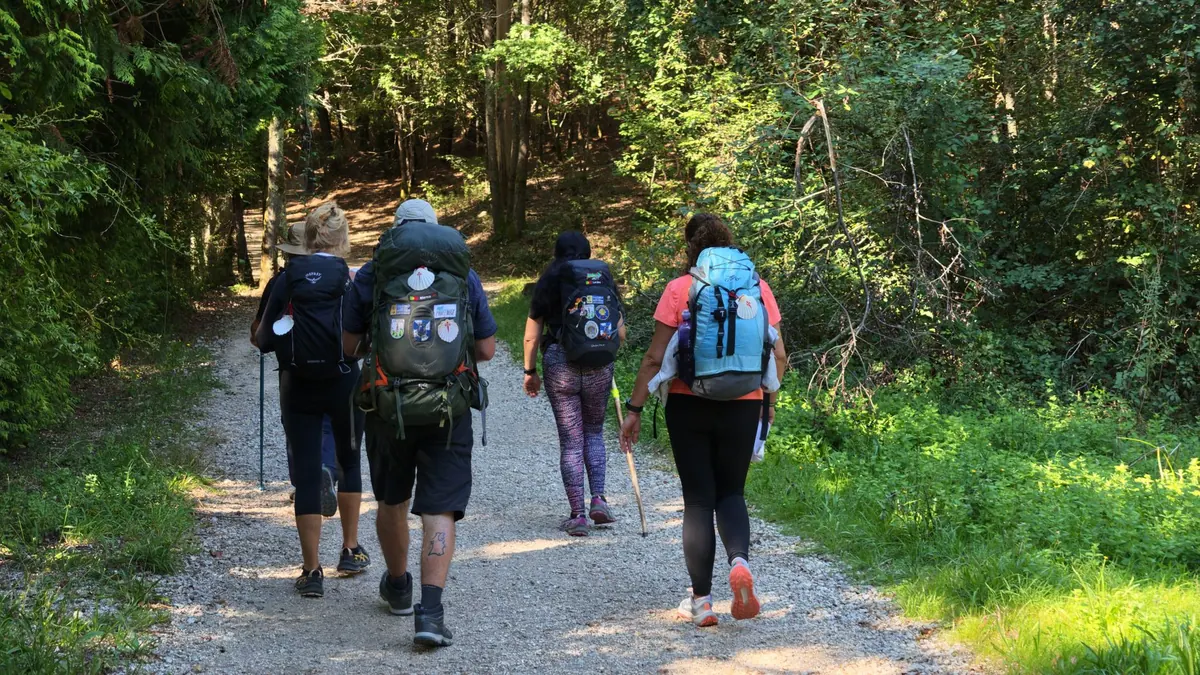
Photo: Fábio Rocha / Pexels

You Might Also Like
Sports clubs, cultural groups, hamlet associations and civic volunteers each ask something different of your time. Here is how they compare, and how to join one without overcommitting.
Moving to Attimis goes smoothly when you know which office to visit first, how the waste calendar works, and why the bar in the piazza matters more than any welcome pack.