How to Register for Attimis Community Events: Step-by-Step Guide
Most people in Attimis hear about an event too late. A neighbour mentions the walk to the castle on Sunday, someone else says the parish dinner was lovely, and by then the sign-up sheet has been closed for a week. The events themselves are rarely hard to join — the difficulty is that the information lives in five different places at once, and registration can mean anything from a WhatsApp message to a form at the Pro Loco desk. This guide walks you through the whole sequence: finding what's on, reading the notice properly, signing up, and arriving on the day with the right shoes on.
Where local events are actually announced
There is no single official calendar that catches everything, so it pays to check two or three sources rather than waiting for one perfect list.
The formal channels
The municipal notice boards and the town website carry the official side of things: permits, road closures, changes to a venue, public meetings. If an event affects traffic or uses a public space, the confirmation will usually appear there. The parish bulletin and the posters near the church door cover a surprising amount of the social calendar — patron saint celebrations, choir evenings, collections, the annual dinner.
The informal ones
Volunteer associations, walking groups and sports clubs usually announce through their own social pages and group chats. Ask at the bar, the bakery or the school gate; in a town this size, the person behind the counter often knows more than any website. One practical move: when you sign up for anything, ask to be added to the organiser's mailing list or message group. That single request will keep you informed for years.
Read the notice before you sign up
A registration that goes wrong is almost always a notice that was read too quickly. Before you fill anything in, work through the details:
- Time. Note the difference between the meeting time and the start time. For walks it can be half an hour.
- Meeting point. "Piazza" is not precise enough if there are two. Ask for a landmark, and check whether cars are shared from a central spot.
- Length and difficulty. For a walk, look for distance, climbing and whether the path is stony, steep or suitable for children.
- Cost and what it includes. Lunch, transport, a guide, a tasting — each changes the price. If nothing is stated, ask rather than assume.
- Membership. Many associations require an annual card to take part, usually a small sum. It is a formality, but it has to be done before the day.
- Deadline and numbers. Some events cap participants. Registering the night before is often too late.
- Weather policy. Find out whether the event runs in rain, and where the announcement of a cancellation will appear.
- What to bring. Water, food, a torch, a rain jacket. If it isn't listed, ask.
If the notice is missing three or more of these, send one short message with all your questions at once. Organisers are volunteers and answer faster when they aren't chasing a dozen separate threads.
How to register, step by step
The channel varies, but the sequence is nearly always the same.
- Pick the channel the organiser asks for. If they say a form, use the form — a message sent to a different page may not reach the person keeping the list.
- Register every person separately. Children, partners, visiting relatives. Give the ages of minors, since some activities have limits.
- Give a phone number you will actually answer on the day. This is how a cancellation or a change of meeting point reaches you.
- Deal with the membership card first if one is required, and say clearly that you have it.
- Pay as instructed and keep the confirmation. A screenshot of the payment is enough.
- Wait for a reply. Silence is not a confirmation. If you hear nothing by two days before the event, ask once, politely.
One last habit worth building: mention dietary needs, mobility issues, a dog, or a pushchair at the moment of registering, not at the table or at the foot of the path.
What happens after you register
Most events confirm within a few days. Popular walks and dinners do fill up, and a waiting list is normal — being on it is worth it, because places open up in the final week. If you are offered a place off the list, reply quickly; organisers cannot hold it indefinitely.
The other side of that courtesy is telling them when you cannot come. A message saying "I registered but I can't make it" frees a place for someone else and costs you nothing. If you want to bring a friend who has not registered, ask first rather than turning up together.
Preparing the week before
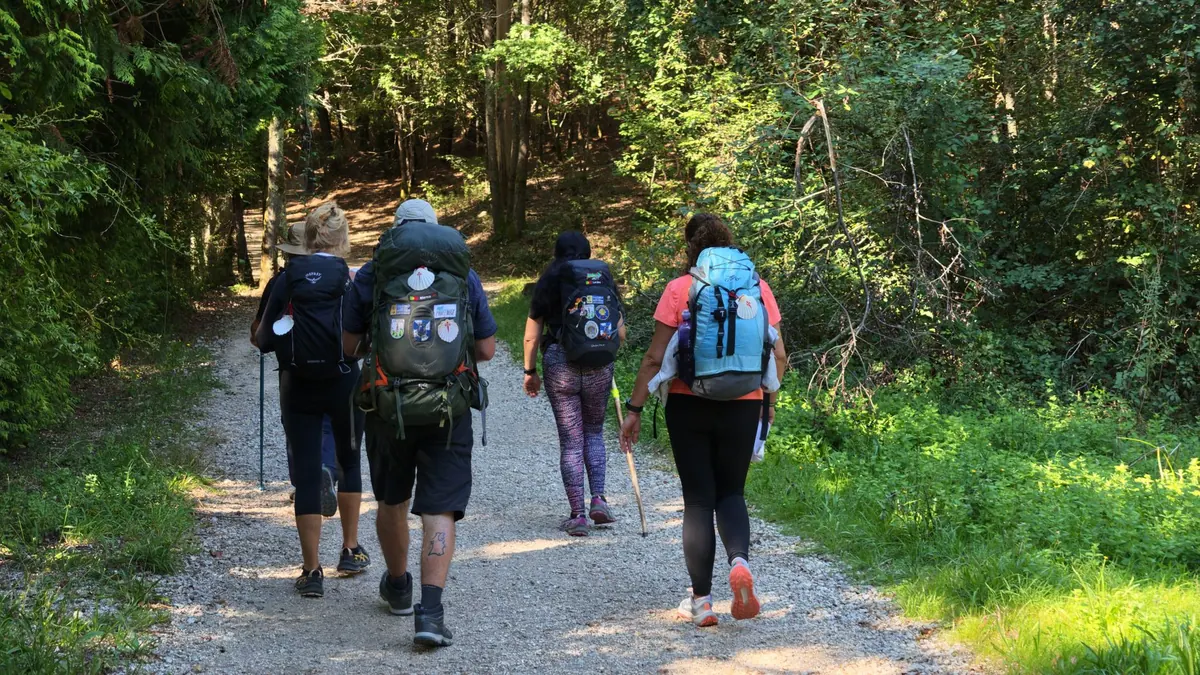
For walks and outdoor events, footwear decides the day. Trainers are fine on the easy tracks around the village; for anything heading up towards the castle ruins or along the steeper paths towards Faedis and Monte Bernadia, wear shoes with grip and an ankle you trust. Bring a light rain layer even on a bright forecast, and a warm one for the evening return.
Pack water for more than you expect to need, a small snack, and cash — not every volunteer stand takes cards. Carry identification and any medication you might need. Dogs are welcome at many events but almost always on a lead; check before assuming.
On the morning itself, aim to arrive fifteen minutes early. Parking near the piazza and around the narrow village streets fills quickly, and lifts are usually easy to arrange if you ask the day before. If an event involves a long walk and you are unsure about the route or a health condition, ask the organisers what the terrain is like and take advice from your doctor before you commit.
If it's your first time, or your Italian is still shaky
Say so when you register. A line as simple as "it's my first event, I'll be on my own" is enough, and organisers will usually introduce you to someone or point you towards a group. Bring a friend if you can — it makes the first twenty minutes much easier.
You do not need fluent Italian to take part in a walk or a dinner. A few phrases go a long way, and a translation app on your phone covers the rest. If you need to ask something detailed, send the question in a message before the event rather than raising it at the meeting point, when the organiser is counting heads and handing out route maps.
A short checklist before you hit send
Name, phone number, number of people and their ages. Membership sorted if required. Payment made and saved. Meeting point and time written down somewhere other than a chat you will scroll past. Weather policy known. Shoes decided. Fifteen minutes added to your departure time.
That is the whole system, and it takes about ten minutes. Do it once properly and the next event is easier still — because by then you will be on the list that tells you what's happening before the posters go up.
Photo: RamadhanNotonegoro / Pixabay
You Might Also Like
Sports clubs, cultural groups, hamlet associations and civic volunteers each ask something different of your time. Here is how they compare, and how to join one without overcommitting.
Moving to Attimis goes smoothly when you know which office to visit first, how the waste calendar works, and why the bar in the piazza matters more than any welcome pack.