Meet the Makers of Attimis: Local Artisans Keeping Traditional Crafts Alive
The crafts that survive in Attimis are not the ones behind glass. They are the ones that fit into the gaps of ordinary life: a shed at the back of the house, a kitchen table covered in willow, a garage with the door rolled up in fine weather. There is no row of heritage workshops along the main street. What you find instead is a scatter of small, working places, each tied to a family, a house, a piece of land — and to the calendar of village life.
That is what makes them worth meeting. The people who still weave, forge, carve, build and repair here are not keeping a museum piece alive. They make things that get used: a chair that has to hold a body, a gate that has to close, a wall that has to stand another fifty years. Here are the trades you are most likely to come across, how they connect to the town, and how to approach them without wasting anyone's morning.
Chestnut, Beech and a Bench That Never Clears
Wood is the first craft anyone notices here, because the raw material is standing all around the village. The hills above Attimis are managed woods, and the men and women who work them know exactly which slope gives a straight chestnut pole and which gives beech worth putting under a plane. Chestnut goes outside — fences, pergolas, beams, the frame of a shed. Beech, walnut and cherry go indoors, into tables and chairs and the odd repaired drawer.
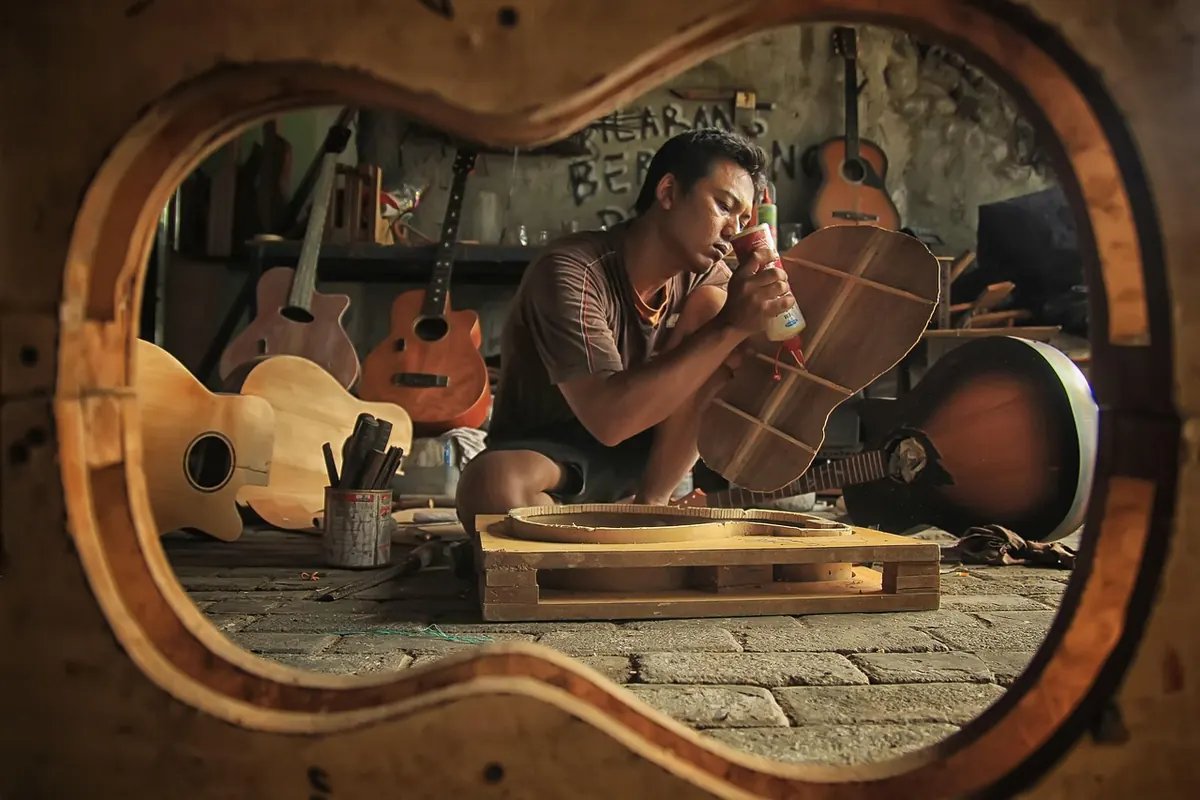
The most common workshop is not a furniture factory but a repair bench. A restorer's first job is often not wood at all; it is glue and patience. Somebody's grandfather patched a leg in the 1970s with a nail and a lot of hope, and that has to come out before a decent repair can go in. Look closely at old furniture in local houses and you can read the whole history of the family in the joints.
Hand tools still matter. A drawknife, a few well-kept planes, a frame saw and a good bench will do most of what a small workshop needs. What changes is the sharpening: it happens constantly, and any woodworker will tell you that the sharpening stone is the most used tool in the room.
Iron, Fire and the Jobs Nobody Else Wants
The forge is the loudest workshop and the one most likely to be busy in winter, when outside work slows down. Gates, railings, hinges, brackets, hooks, tools repaired rather than replaced. Shoeing horses has largely gone elsewhere, but welding, straightening and sharpening have not.
The craft is in the matching
Ask a smith what they actually spend their time on and the answer is usually less romantic than expected: making one thing look like another. A gate on a house built in the 1920s needs a hinge that matches the one on the other side of the door. A railing along a stone wall has to sit at the same height and rhythm as the section thirty metres away. That is the real skill — not the dramatic spark, but the eye that keeps a village street looking like one street.
It is also a trade of small kindnesses. Farmers bring in a part that stopped being manufactured decades ago. A neighbour arrives with a bracket that broke on a Sunday. Much of this work is unglamorous, quick and badly paid, and it is exactly the work that keeps older buildings usable instead of replaced.
Willow, Corn Husk and the Return of the Basket
Basket weaving nearly disappeared here and has come back partly for practical reasons and partly because people like carrying something that is not plastic. Willow is cut in the dormant season, when the sap is down and the rods are flexible and pale. The rest is patience and wet hands.
A working basket goes through a predictable sequence:
- Cut and sort the rods by length and thickness; anything curved or damaged goes to the fire.
- Soak the bundles — a day or more for dry rods, less for fresh ones — until they bend without cracking.
- Build the base first, either on a crossed pair of stout rods or around a hoop, and lash it firmly.
- Set the uprights (the stakes), then weave the sides in a rhythm of over and under, tapping each row down tight.
- Finish with a border that folds the stakes back into the rim, then dry the basket slowly, away from direct heat, so it does not warp.
Alongside willow there is the older, quieter work with corn husks — dried, dampened, twisted into plaits and used for chair seats and small household containers. It costs almost nothing but time, which is precisely why it survived in farmhouses and why it is now taught to children at fairs and in school workshops.
Stone, Lime and Mosaic
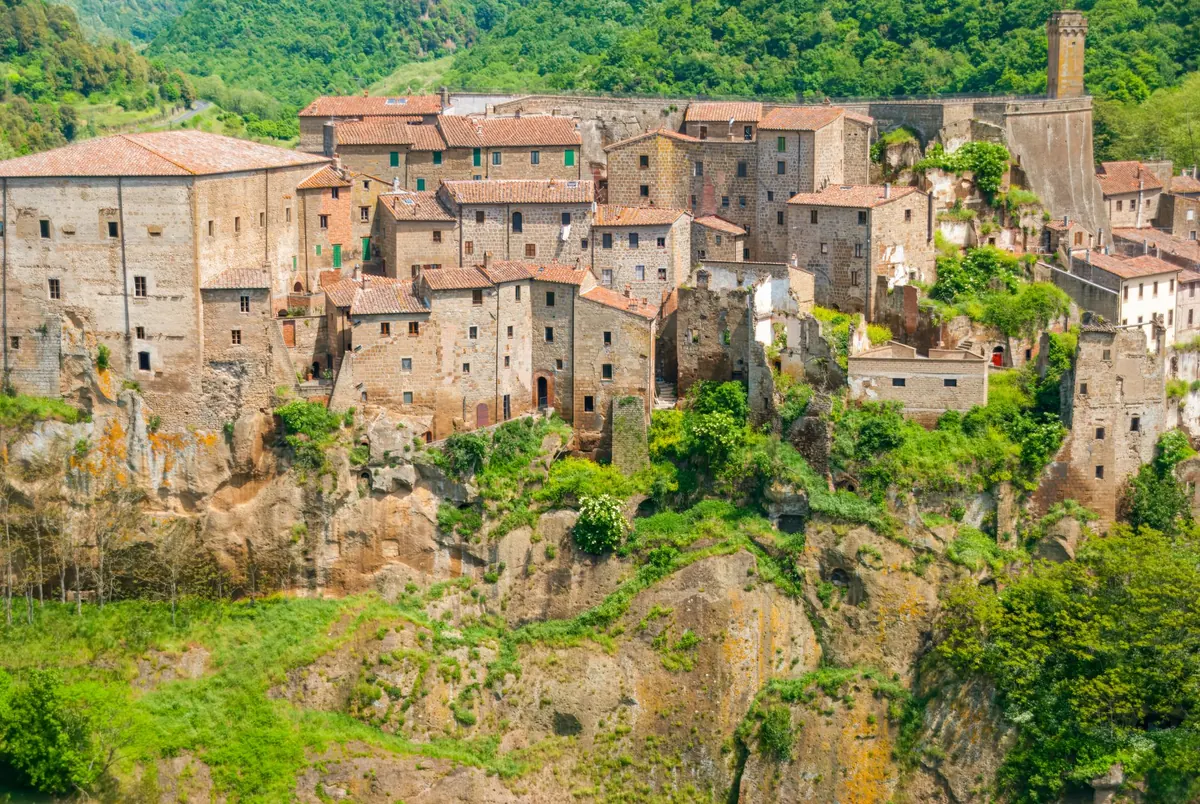
The walls around Attimis tell you what the ground is made of: layered stone that splits into flat pieces and stacks into the terraced edges and retaining walls that hold the hillsides in place. Rebuilding a section of dry stone wall or repointing a facade with lime mortar is slow, physical work that cannot be hurried, and there are only a handful of people locally who do it properly.
Mosaic sits at the other end of the scale. The Scuola Mosaicisti del Friuli in Spilimbergo has trained mosaicists from across the region for generations, and some of that training has come back to these villages in the form of small panels, house numbers, signs and restoration work. The two trades share a logic: cut the material to fit, set it once, and let the joints do the talking.
How the Crafts Hold the Town Together
None of this is separate from the cultural life of Attimis; it is the machinery underneath it. The wooden frame of a stall at the village festival, the repaired door of a church, the banner carried in a procession, the crib assembled in December, the bench outside a bar that gets re-legged every few years — these are made and mended by people who live within a few kilometres of the job.
That proximity changes the transaction. When you commission a table from a local maker, you are not buying an object from a catalogue; you are starting a relationship that lasts as long as the table does, and probably longer. It also means the maker knows your house, your stairs and how wide the door is. Bring measurements and photographs, not just a picture from a magazine.
It is worth saying plainly that this is fragile work. Many of these artisans are older, and one retirement can end a set of skills that took forty years to build. The comeback in baskets and woodwork is real, but it is small, and it depends on people actually buying the things.
Learning It Slowly
Formal courses exist at regional level, and the mosaic school is the best-known example, but most of the people doing this work learned in a workshop, from a relative, a neighbour or an employer who needed a second pair of hands. Apprenticeships in small trades are rarely advertised. They are arranged over a coffee, after someone has seen you turn up three times and not complain about sweeping.
If you want to learn, be specific and be useful. Ask whether you can come on a Saturday morning to help with the boring jobs. Turn up on time. Do not ask to make a masterpiece in your first month. Expect to spend a long while sanding, sorting, stacking and watching before anyone hands you a tool that matters.
Visiting the Makers: A Practical Guide
- Go on a weekday morning. Workshops are quietest then, and the person you want to talk to is more likely to be in.
- Ask before you take photographs. Many makers are happy to be pictured; none like being surprised by a phone in their face mid-task.
- Buy something small first. A basket, a hook, a cutting board, a few repaired hinges — a small purchase tells a maker you are serious.
- Be clear about a commission. Agree the size, the material, the finish and the timing in writing, and expect to leave a deposit.
- Respect the work rhythm. If the forge is hot or the glue is setting, wait. Ask when to come back rather than pushing the conversation.
- Ask what they need. Often it is not praise but a source of good wood, a lift with a delivery, or simply someone who will pass the word on.
The best way to keep these trades in Attimis is not to admire them from a distance. It is to walk in, say hello, and leave with something made by hand.
Photo: endriqstudio / Pixabay


You Might Also Like
Sports clubs, cultural groups, hamlet associations and civic volunteers each ask something different of your time. Here is how they compare, and how to join one without overcommitting.
Moving to Attimis goes smoothly when you know which office to visit first, how the waste calendar works, and why the bar in the piazza matters more than any welcome pack.